
Healthy hair is often associated with shampoos, oils, scalp treatments, and hair-care routines. But hair health is also influenced by what happens inside the body. In recent years, researchers have become increasingly interested in the connection between gut health and hair health, particularly the role of nutrition, digestion, inflammation, immunity, and the gut microbiome.
This connection is sometimes described as part of the gut–skin–hair axis. However, it is important to understand that poor gut health does not automatically cause hair loss. Hair thinning can have many different causes, including genetics, nutritional deficiencies, hormonal changes, stress, certain medical conditions, and hair-care practices.
So, how exactly could your gut influence your hair?
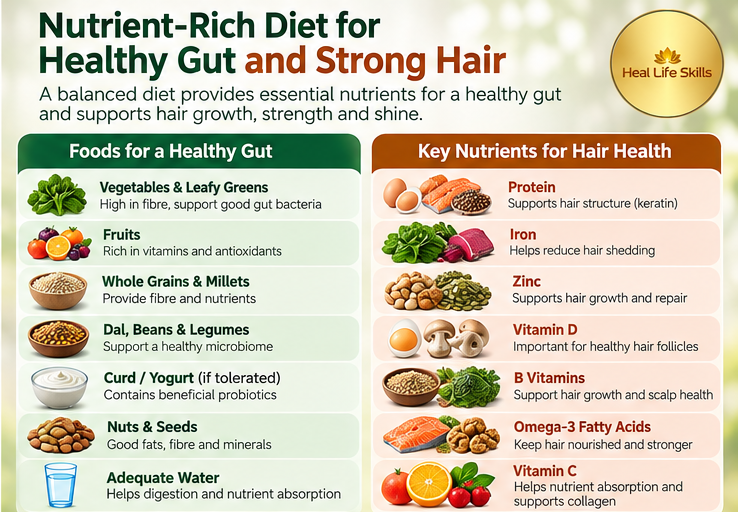
Understanding the Gut–Hair Connection
The relationship can be simplified as:
Gut → Digestion and absorption → Nutrients and immune signals → Hair follicles
Hair follicles are highly active structures that require a steady supply of nutrients and energy. If the body is unable to obtain or properly absorb essential nutrients, hair growth and hair quality may be affected.
At the same time, the gut is home to trillions of microorganisms that interact with the immune system and influence several metabolic processes. Scientists are continuing to investigate how these processes may affect the skin and hair follicles.
Let’s look at the major connections in more detail.
1. Nutrient Absorption Can Affect Hair Health
One of the clearest links between the digestive system and hair is nutrient availability.
Hair follicles require adequate nutrition to support normal growth. Important nutrients include:
- Protein
- Iron
- Zinc
- Vitamin D
- B vitamins
- Essential fatty acids
- Other vitamins and minerals
Digestive disorders or conditions that interfere with nutrient absorption can sometimes contribute to nutritional deficiencies. These deficiencies may lead to increased hair shedding, weaker hair, or changes in hair quality.
For example, inadequate iron stores can be associated with increased hair shedding in some people. Similarly, insufficient protein intake can affect the body’s ability to maintain tissues, including hair.
This is why maintaining a balanced diet is an important part of supporting healthy hair.
2. The Gut Microbiome May Play a Role
The gut microbiome refers to the enormous community of bacteria and other microorganisms living in the digestive tract.
These microorganisms are involved in digestion, metabolism, and interactions with the immune system. Researchers are investigating whether changes in the gut microbiome can influence processes beyond the digestive system.
This has led to growing interest in the gut–skin axis and its possible relationship with hair follicles.
However, research into the specific relationship between the gut microbiome and common types of hair loss is still developing. It would therefore be misleading to claim that changing your gut bacteria will automatically stop hair loss or regrow thinning hair.
The science is promising, but there is still much to learn.
3. Gut Health, Inflammation and Immune Function
The gut plays an important role in the body’s immune system.
Changes in the intestinal environment can influence immune and inflammatory pathways throughout the body. Because hair follicles can also be affected by inflammatory and immune processes, researchers are exploring whether these pathways could contribute to certain hair and scalp conditions.
However, the relationship is complex.
Not every digestive problem causes systemic inflammation, and not every inflammatory condition leads to hair loss. More research is needed to understand exactly how gut-related immune processes may influence different types of hair disorders.
4. Hormonal and Metabolic Health
Gut health can also be connected indirectly to broader metabolic and hormonal health.
Hormonal conditions can have a significant impact on hair growth. One example is polycystic ovary syndrome (PCOS), which can be associated with hormonal changes and female-pattern hair loss.
This doesn’t mean that poor gut health causes PCOS or that improving gut health will cure hormone-related hair loss. Rather, digestive, metabolic, nutritional, and hormonal health can interact with one another, making overall health important when investigating hair changes.
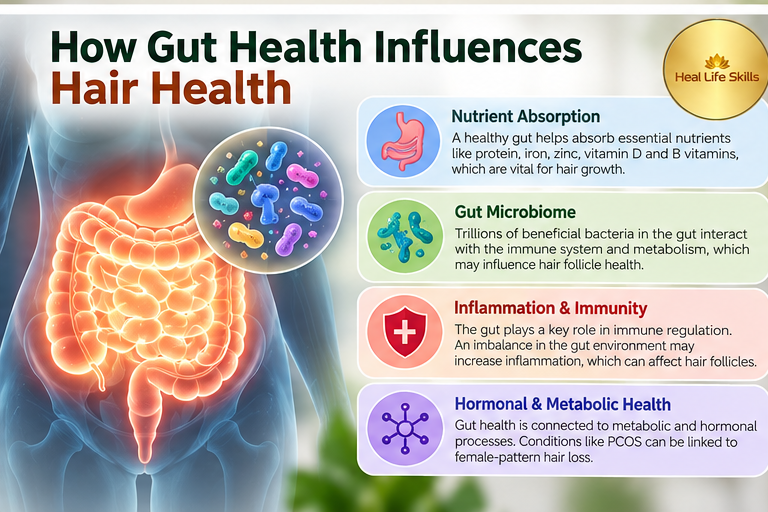
What Should You Eat for Better Gut and Hair Health?
You don’t necessarily need expensive supplements, detox drinks, or specialised “hair-growth” products to support your gut and hair.
A varied, nutrient-rich diet is a good starting point.
Foods That Support Gut Health
Consider including a variety of:
- Vegetables and leafy greens
- Fruits
- Whole grains and millets
- Lentils, dal, beans, and other legumes
- Nuts and seeds
- Curd or yogurt if you tolerate dairy
- Other minimally processed plant foods
- Adequate fluids and water
Eating a diverse range of plant foods can provide fibre and other compounds that support a healthy and diverse gut microbiome.
Foods That Support Hair Health
For hair specifically, pay attention to adequate intake of:
Protein:
Eggs, fish, chicken, dairy, soy, lentils, beans, and other protein-rich foods can help meet the body’s protein requirements.
Iron:
Legumes, leafy greens, meat, seafood, and iron-fortified foods can contribute to iron intake.
Zinc:
Nuts, seeds, legumes, dairy, seafood, and meat can provide zinc.
Omega-3 fatty acids:
Fatty fish, walnuts, chia seeds, flaxseeds, and other sources can contribute beneficial fatty acids.
Vitamin C:
Citrus fruits, guava, berries, tomatoes, peppers, and other fruits and vegetables provide vitamin C and can complement an overall nutritious diet.
The goal isn’t to focus on a single “superfood.” Overall dietary quality and adequate nutrition matter more.
Do Probiotics Help Hair Growth?
Probiotics are often marketed as a solution for everything from digestive problems to skin and hair concerns.
But when it comes specifically to hair loss, the evidence is not strong enough to conclude that probiotic supplements can regrow thinning hair.
Some probiotic products may be useful for specific digestive conditions, but taking a probiotic simply because you are experiencing hair thinning is not necessarily the right approach.
Instead, focus first on a varied diet containing plenty of fibre-rich plant foods and adequate nutrients.
If you have persistent digestive symptoms, speak with a healthcare professional rather than relying solely on supplements.
What About “Gut Detox” for Hair Loss?
The idea that you need to “detox your gut” to stop hair loss is largely an oversimplification.
Your digestive system already has natural processes for handling and eliminating waste. Extreme detox diets, prolonged fasting, or restrictive eating patterns can actually make nutritional deficiencies more likely.
This is particularly important because crash diets and prolonged calorie restriction can themselves contribute to increased hair shedding.
Instead of searching for a quick detox, focus on sustainable habits:
- Eat a balanced diet
- Get enough protein
- Include fibre-rich foods
- Stay adequately hydrated
- Avoid unnecessary restrictive diets
- Maintain regular meals
- Address persistent digestive symptoms with professional guidance
Gut Health Is Not the Only Explanation for Hair Thinning
This is one of the most important points to remember.
If you notice hair thinning, don’t automatically assume that your gut is the cause.
Hair loss can occur for many reasons.
Nutritional deficiencies
Low levels of certain nutrients, particularly when associated with inadequate intake or impaired absorption, can contribute to hair shedding.
Female-pattern hair loss
Female-pattern hair loss can cause progressive thinning, particularly around the central part and top of the scalp. This involves changes in the hair follicles and should not be confused with temporary shedding caused by nutritional problems.
Stress and illness
Significant physical or emotional stress, illness, surgery, or other major events can sometimes trigger increased shedding.
Hormonal changes
Changes involving hormones can influence hair growth. Conditions such as PCOS may also be associated with certain patterns of hair thinning.
Hairstyles and traction
Repeatedly wearing very tight hairstyles can put tension on the hair follicles. Over time, this can contribute to traction-related hair loss, particularly around the hairline and temples.
Other scalp and medical conditions
Certain scalp disorders, medications, autoimmune conditions, and other medical problems can also contribute to hair loss.
Therefore, identifying the type and pattern of hair loss is often more useful than simply assuming that the gut is responsible.
Front Hairline Thinning: Why the Pattern Matters
If hair thinning is particularly noticeable around the front or temples, it is worth paying attention to the pattern.
For example:
Nutritional deficiency or temporary shedding
→ More hairs enter the shedding phase
→ Overall density may decrease
Female-pattern hair loss
→ Certain follicles gradually become smaller
→ Hair becomes finer and shorter over time
Traction
→ Repeated pulling damages follicles
→ Hairline or temple thinning may develop
These situations can look similar initially but require different approaches.
That is why persistent or progressive hair thinning deserves proper evaluation rather than being treated solely with probiotics, supplements, or “gut detox” products.
How to Support Both Your Gut and Your Hair
Fortunately, many healthy habits can support overall wellbeing while also providing the nutrients needed for healthy hair.
1. Eat a diverse diet
Try to include different vegetables, fruits, whole grains, legumes, nuts, seeds, and adequate protein sources throughout the week.
2. Prioritise protein
Hair is largely made up of a protein called keratin. Consistently inadequate protein intake can therefore be problematic for hair health.
3. Avoid crash diets
Rapid weight-loss diets and severe calorie restriction can trigger increased hair shedding in some people.
4. Look after your digestive health
If you regularly experience symptoms such as persistent bloating, diarrhoea, constipation, abdominal pain, or unexplained changes in digestion, discuss them with a healthcare professional.
5. Be gentle with your hair
Avoid excessive heat, harsh chemical treatments, and hairstyles that constantly pull on the hairline.
6. Don’t take supplements blindly
Taking large amounts of vitamins or minerals without identifying a deficiency isn’t necessarily beneficial and can sometimes be harmful.
If hair loss is persistent, a healthcare professional can determine whether nutritional or other medical evaluation is appropriate.
The Bottom Line
There is a meaningful relationship between gut health and hair health, particularly through nutrition, nutrient absorption, immune regulation, inflammation, and broader metabolic processes.
However, the relationship is much more complicated than saying:
“Bad gut health causes hair loss.”
A healthy digestive system can support proper nutrient availability and overall health, but hair thinning can have many causes.
The best approach is to focus on the fundamentals: eat a varied and nutritious diet, consume adequate protein, avoid extreme diets, take care of your scalp and hair, and investigate persistent or progressive hair loss rather than assuming it is caused by the gut. Your gut may be one piece of the puzzle—but understanding the complete picture is what matters most for healthier hair.