Healthy hair is often linked with confidence and general well-being. However many women face hair fall, thinning, scalp irritation, dryness or early greying at times in their lives. Knowing what is causing the issue is the step toward better hair. Not all hair problems need the kind of treatment.
14 Common Types of Female Hair Issues
1. Excessive Hair Shedding
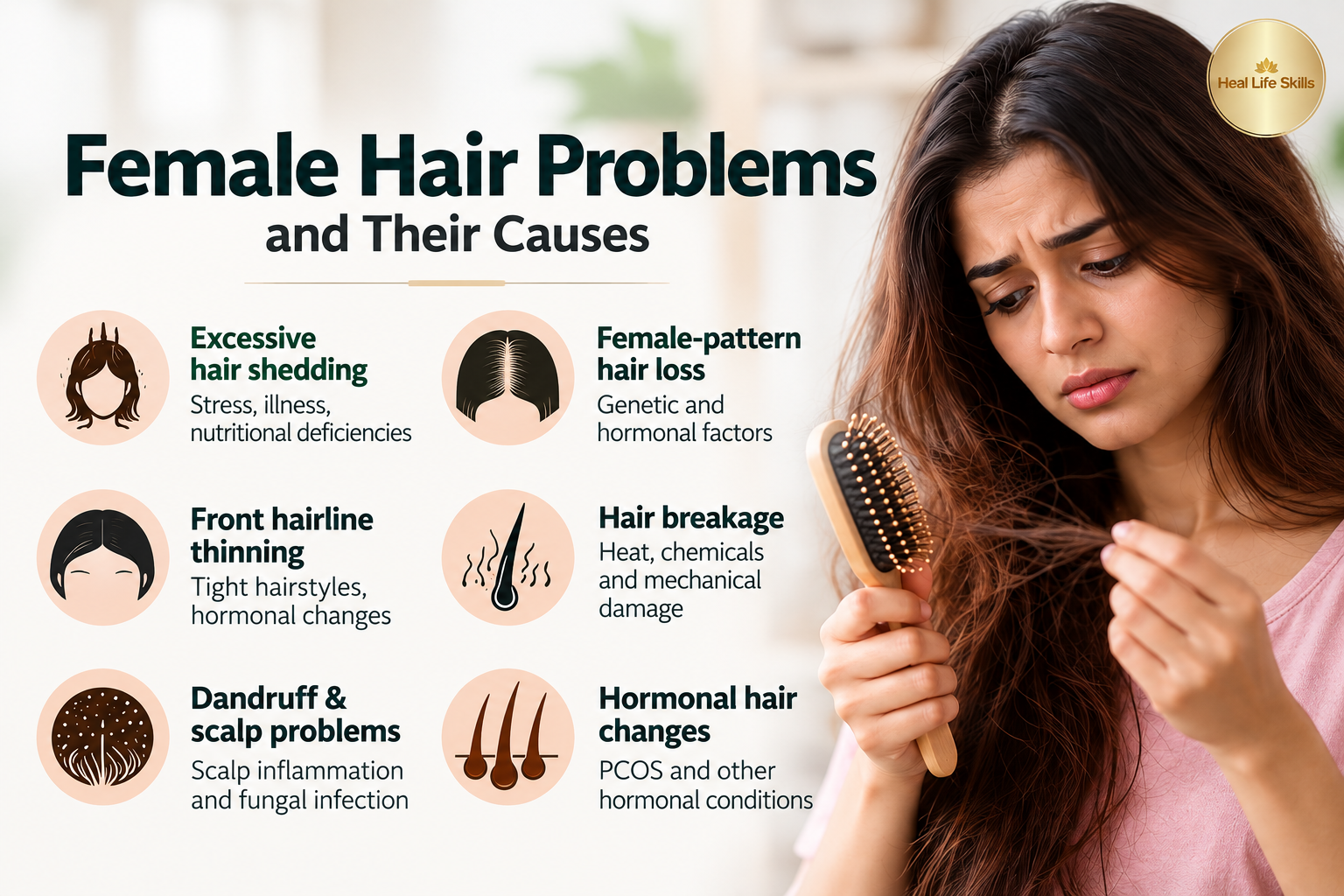
Finding a lot of hair on your pillow in your comb or in the shower drain can be a sign of much hair shedding. Stress, sickness not getting nutrients losing a lot of weight quickly and changes in hormones can all lead to this problem.
2. Female-Pattern Hair Loss
Female-pattern hair loss usually happens slowly. Women might notice that their middle part is getting wider their hair is less thick. They are losing hair near the top and the front of their head. Things like genes and hormones can be involved.
3. Front Hairline Thinning
Hair loss around the forehead. Temples can come from genetics, hormone changes or pulling from hairstyles that are too tight. Catching the cause early can help stop loss.
4. Traction Alopecia
Tight ponytails, buns, braids and hair extensions can pull on hair follicles leading to thinning near the hairline. Keeping hair loose is a way to avoid this problem.
5. Telogen Effluvium
This issue causes wide hair loss. It often happens after a lot of stress, a fever, surgery, illness, childbirth or losing weight quickly. Hair thickness can get better once the problem causing it is fixed.
6. Alopecia Areata
Alopecia areata is a condition where the body attacks its hair. It can cause round areas of hair loss. Seeing a doctor is important to find the treatment.
7. Hair Breakage
Short, broken pieces of hair often mean the hair shaft is damaged of the roots. Using much heat, bleaching, chemical treatments and brushing too hard can make hair weak.
8. Dry and Brittle Hair
Dry hair may look rough, frizzy and hard to manage. Using washes, conditioners and limiting heat can help stop more damage.
9. Oily Scalp
Much oil from the scalp can make hair look greasy fast. Choosing the shampoo and washing when needed can help keep the scalp clean.
10. Dandruff and Seborrheic Dermatitis
These problems can cause skin, flakes, redness and oily scales. Using -dandruff shampoos that have medicine can help, depending on how bad it is.
11. Scalp Psoriasis
Scalp psoriasis is a type of condition that happens when the immune system is involved. It can cause clear scaly spots. Seeing a skin doctor can help manage it.
12. Fungal Scalp Infections
Fungal infections can cause scaling, itching, broken hair and patches of hair loss. They usually need medicine from a doctor of just home treatments.
13. Premature Greying
Genes are the reason for early greying but some health or nutrition problems can also play a part in some cases.
14. Hormonal Hair Changes
Conditions like ovary syndrome (PCOS) can be linked with thinning hair, irregular periods, acne or more hair on the face. These signs need a doctors check-up.
Hair Fall, Hair Thinning and Hair Breakage: What’s the Difference?
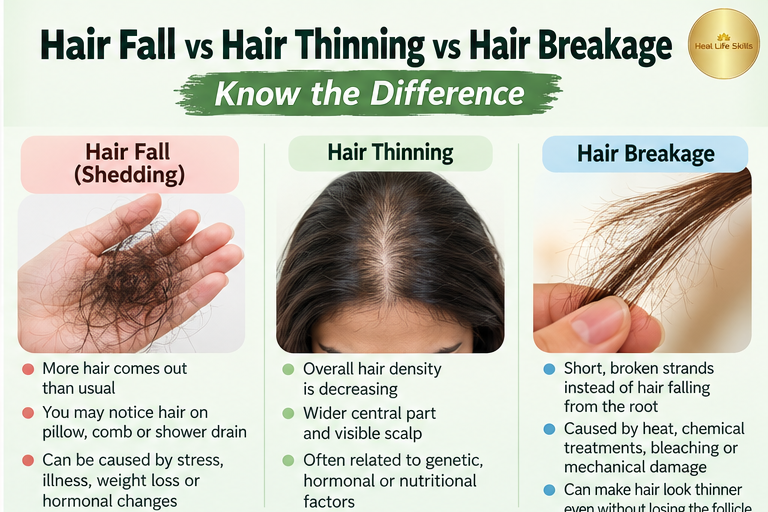
Hair shedding means more hairs are falling out than normal. Hair thinning means the hair is dense overall. Hair breakage means the hair shaft is breaking. These problems can mix,. Each might need a different way to fix it.
Practical Tips for Managing Hair Problems
Eat a diet with enough protein, iron and other important nutrients. Avoid hairstyles, too much heat and harsh chemical treatments. Choose hair products that work for your scalp and deal with dandruff or inflammation if it happens.
Rosemary oil is sometimes used as a hair-care choice. There is not much proof that it works. One small study said hair count improved after six months, not three. Do not put essential oil directly on the scalp. Stop using it if the skin gets irritated.
When Should You Consult a Dermatologist?
Go see a doctor if hair loss is getting worse your middle part is getting wider bald spots. Your scalp feels painful is red or has a lot of flakes. A dermatologist can look into what’s causing the issue, including changes, in hormones, thyroid issues, not enough nutrients and genetic hair loss.
Final Thoughts
Healthy hair starts with knowing your scalp and noticing changes. Of only using home treatments find out what is causing your hair problem and pick the right care routine. With the attention and treatment many hair and scalp conditions can be managed better.