
Breathing is something we do every moment without thinking about it.. The way we breathe has a big impact on our mind and body and overall health. In yoga this is called Pranayama, which’s all about controlling our breath to influence our life energy and mental state.
Now scientists agree with what yogis knew a time ago: when we breathe in a controlled way it affects our nervous system and heart rate and stress response and brain function.
What is Pranayama
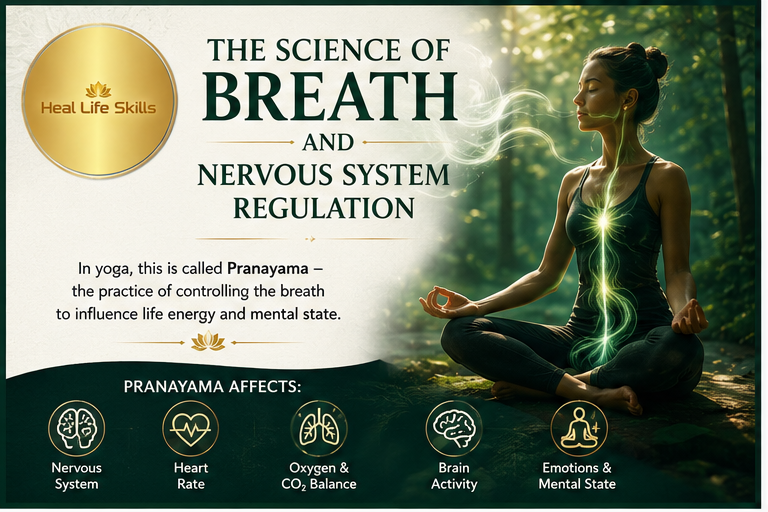
Pranayama is about controlling our breath to influence our life energy. From a point of view Pranayama is a set of breathing techniques that affect:
- Our nervous system
- Our heart rate
- The balance of oxygen and carbon dioxide in our body
- Our brain activity
- How we regulate our emotions
Breathing is one of the things our body does that we can control. This makes it a direct connection between our body and mind.
Understanding the Nervous System
To understand how breathing affects our body we need to know how our nervous system works.
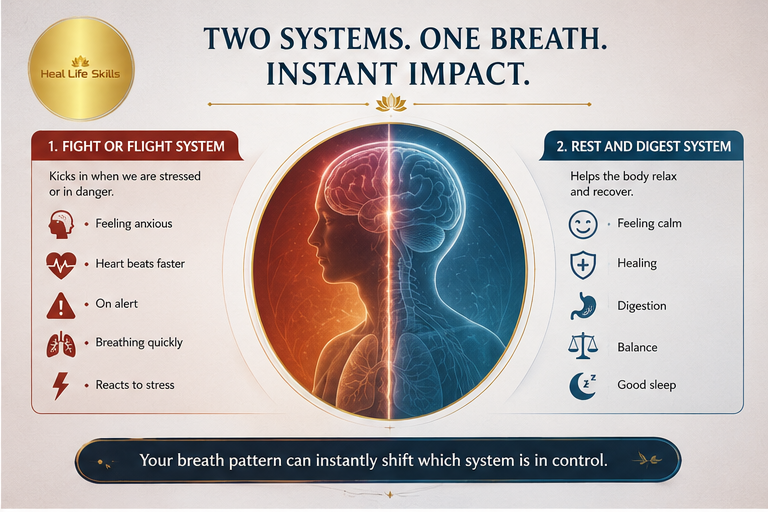
1. The Fight or Flight system
This system kicks in when we are stressed or in danger. It is associated with:
- Feeling anxious
- Our heart beating faster
- Being on alert
- Breathing quickly
- Reacting to stress
2. The Rest and Digest system
This system helps our body relax and recover. It supports:
- Feeling calm
- Healing
- Digestion
- Balance
- Good sleep
The interesting thing is that our breathing pattern can instantly change which system is in control.
How Breath Controls the Nervous System
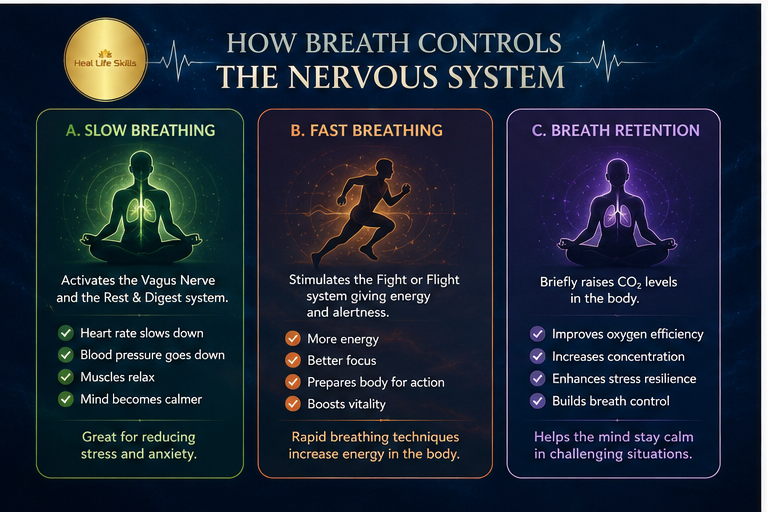
A. Slow Breathing
When we breathe deeply and slowly it stimulates the vagus nerve, which activates the Rest and Digest system.
As a result:
- Our heart rate slows down
- Our blood pressure goes down
- Our muscles relax
- Our mind becomes calmer
This is why slow breathing is great for reducing stress and anxiety.
B. Fast Breathing
When we breathe quickly it stimulates the Fight or Flight system giving us energy and alertness.
The following activities will help us become more energetic while developing better concentration skills and preparing our bodies for physical work and boosting our overall physical vitality. The breath techniques in yoga use rapid breathing to create a state of increased energy throughout the body.
C. Breath Retention
Breath holding causes our body carbon dioxide levels to rise for a short period.
The following benefits occur through this process:
- Our oxygen consumption efficiency improves
- Our ability to concentrate increases
- Our stress response system becomes more effective
- We develop better control over our breathing pattern
Retention practices enable our mind to remain composed when facing demanding situations.
Scientific Mechanisms Behind Pranayama
1. Vagus Nerve Stimulation
Slow exhalation serves as a direct trigger for activating the vagus nerve through its mechanism of operation.
Individuals with higher vagal tone show improved ability to manage their emotions and better withstand stress while maintaining a greater capacity to relax their bodies.
2. Heart Rate Variability
Pranayama exercises enhance our ability to control heart rate variability, which plays a critical role in sustaining our nervous system functions.
People with higher heart rate variability demonstrate better ability to handle stress because of their enhanced heart function and capacity to recover from stress.
3. Oxygen-Carbon Dioxide Balance
Proper breathing establishes an equilibrium between oxygen and carbon dioxide levels in the atmosphere.
The system prevents all three of these processes
- The process of breathing
- Hyperventilation
- Stress-related breathing difficulties
Balanced breathing maintains both mental stability and emotional stability.
4. Brain Wave Changes
Research shows that slow breathing can increase brain waves.
Alpha waves carry associations with four mental states:
- Relaxation
- Creativity
- Clear thinking
- A state of peaceful awareness
Breathing exercises function as foundational components of both meditation practices and mindfulness educational systems.
Key Pranayama. Their Effects
1. Diaphragmatic Breathing
The method requires users to direct their breath towards their abdominal region.
The following benefits arise from this method:
- Body systems enter a state of relaxation
- Tension levels decrease
- Users experience better oxygen intake efficiency
2. Alternate Nostril Breathing
This yogic practice requires people to breathe through one nostril while their other nostril remains closed. The practice offers benefits which include the following three effects The practice helps to balance our brain hemispheres The practice helps to decrease our anxiety levels The practice helps to boost our ability to focus The practice helps to establish equilibrium
3. Humming Bee Breath
The technique requires users to create a humming sound which they release through their breath. Humming creates vibrations which have the power to Humming creates vibrations which help our system to become more peaceful Humming produces vibrations which help to decrease both anger and stress Humming produces vibrations which lead to better sleep Humming produces vibrations which enable our mind to achieve relaxation within a short time
4. Skull-Shining Breath
The technique requires users to exhale their breath while they passively breathe in The technique produces five health benefits which include The technique helps to increase energy levels The technique helps to boost alertness The technique helps to improve blood circulation The technique helps to cleanse our system of toxins
5. Box Breathing
The breathing pattern serves as an effective method which professionals working in high-pressure environments use to manage their stress. The technique requires users to conduct four separate actions which include The user needs to perform an inhalation which lasts four seconds The user needs to hold their breath for four seconds The user needs to release their breath during a four-second period The user requires a four-second duration to hold their breath after exhaling
Benefits include:
- Improved emotional control
- Better focus
- Reduced stress response
- Enhanced mental clarity
Real-Life Benefits of Pranayama
Regular Pranayama practice may help:
- Reduce stress and anxiety
- Improve sleep quality
- Enhance concentration. Focus
- Lower blood pressure
- Strengthen our immune system
- Improve emotional stability
- Increase clarity
- Support overall well-being
Even a few minutes of conscious breathing every day can make a big difference over time.
Simple 10-Minute Daily Practice Routine
You do not need to practice for hours to see benefits. A short daily routine can be very effective.
Morning or Evening Routine
- 2 Minutes – Deep Belly Breathing
Focus on abdominal breathing.
- 3 Minutes – Alternate Nostril Breathing
Practice breathing in and out through nostrils calmly.
- 2 Minutes – Humming Bee Breath
Use gentle humming exhalations to relax your mind.
- 3 Minutes – Slow Breathing with Long Exhalation
Extend your exhalation longer than your inhalation.
Consistency is more important, than intensity.
Final Insight
The way you breathe is really important. It does more than just help you stay alive. Your breath is, like a button that helps control how you feel.
If you think about how you breathe and change it on purpose you can affect a lot of things. For example you can change:
- How you feel inside
- How you react to things that happen to you
- How stressed out you get
- How you feel overall
When you change the way you breathe it can change how you think and feel.. When that happens it can really change your whole life.