
Rosemary leaves is a herb of many names. Its most frequent moniker in culinary and healing traditions is simply Rosemary. This Mediterranean shrub goes by the Latin name Salvia rosmarinus and is one of the world’s most sought after herbs. Rosemary is an evergreen that is valued in healing traditions as well as the culinary world and even the hair care world.
1. Characteristics of Rosemary Leaves
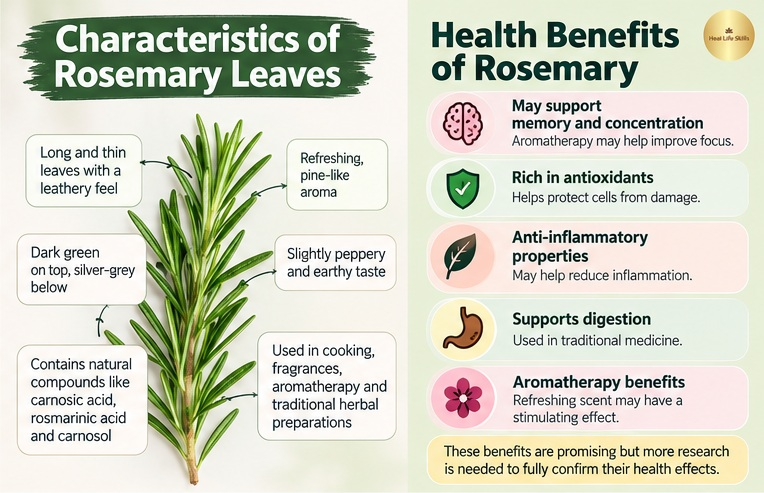
The leaves of the Rosemary plant are long and thin and have a leathery feel. The top of the leaves are typically dark green while the bottom of the leaves have a more silver-grey appearance. These leaves smell a lot like pine. The leaves of Rosemary taste a bit like pepper and are quite earthy.
The leaves of the Rosemary plant contain several naturally occurring compounds including carnosic acid, rosmarinic acid, and carnosol, all of which are studied and recognized for their biological and antioxidant properties.
Rosemary is also used in fragrances and aromatherapy as well as in traditional herbal preparations and the preparation of foods.
2. Advantages of Rosemary Leaves
Traditional medicine says Rosemary has several benefits.
- Memory and concentration: Rosemary oil is used in aromatherapy and studies suggest it can have a positive effect on focus.
- Antioxidants: Compounds in Rosemary provide antioxidant support and can protect cells.
- Anti-inflammatory: Studies indicate some Rosemary compounds may have the ability to impact inflammation.
- Support: Rosemary is used in traditional medicine as an aid to digestion.
- Aromatherapy: The scent is believed to have a stimulating effect.
These benefits are intriguing and need more research to prove its efficacy for health purposes.
3. Rosemary for Hair Growth and Scalp Care
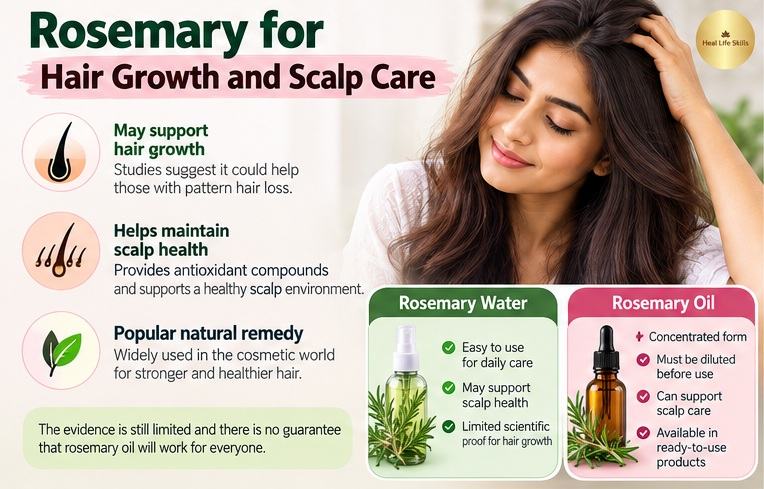
The benefits of rosemary for hair growth are gaining popularity in the cosmetic world. Studies have suggested it could potentially aid in supporting hair growth for those experiencing pattern hair loss.
Rosemary oil does have the potential to help support scalp care by helping maintain the environment and providing antioxidant compounds. While there is potential, the evidence is limited, and there is no guarantee that rosemary oil will work for you for hair loss.
Rosemary Water vs. Rosemary Oil
Rosemary water is an option for daily scalp care that is easy to use, although there is very little proof that it works to grow hair. The concentrated form is rosemary essential oil. It needs to be diluted before applying it.
Rosemary oil for hair can be purchased if you prefer to have it in a ready to use format.
4. How to Use Rosemary Oil
As with all essential oils, rosemary essential oil should always be diluted before use. For application on your scalp, dilute 2 to 3 drops in one tablespoon (15 ml) of carrier oil.
The appropriate amount for one application is around a coin size. Gently massage it into your scalp and let it sit for up to 60 minutes. Wash it off if you do not experience any discomfort. It is always best to perform a patch test on a small area of skin. In the event of a negative reaction (such as redness, itching, burning, etc.), discontinue the product immediately.
Rosemary oil may not work for all types of hair loss, and the cause of hair loss should always be assessed by a professional (like a dermatologist) prior to application.
Conclusion
Rosemary is a herb with distinctive leaves a refreshing aroma and a range of traditional uses. Its antioxidant properties and potential applications in hair care make it an interesting ingredient, for wellness routines. However it is important to distinguish uses from scientifically established benefits and to use concentrated rosemary oil carefully.