
Healthy, strong and shiny hair is often a sign of nutrition and proper hair care. Still many women face issues like hair fall thinning near the forehead and a receding hairline. These problems can be caused by deficiencies, hormonal changes, stress, genetics or too much heat styling.
The good news is that a balanced diet and a simple home hair-care routine can help promote hair growth and reduce damage that could have been avoided.
1. Eat a Balanced Diet for Hair Growth
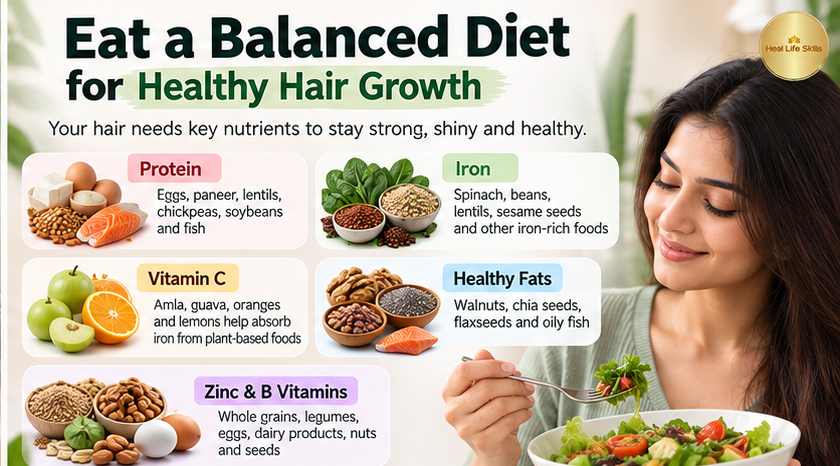
Nutrition is key to keeping hair follicles strong and active. Hair needs protein, iron, zinc and vitamins to grow properly.
Here are some foods to include in your meals:
- Protein: Eggs, paneer, curd, lentils, chickpeas, soybeans and fish give your hair the building blocks it needs.
- Iron: Spinach, beans, lentils, sesame seeds and other iron-rich foods help your body make blood cells.
- Vitamin C: Amla, guava oranges and lemons help your body absorb iron from plant-based foods.
- Healthy fats: Walnuts, chia seeds, flaxseeds and oily fish provide fats that’re good for hair.
- Zinc and B vitamins: Whole grains, legumes, eggs, dairy products, nuts and seeds support hair.
For a diet try combining vegetables, dal or another protein source, rice or roti, curd and seasonal fruit. You don’t need supplements-consistency in your diet matters more.
2. Follow a Gentle Hair-Care Routine
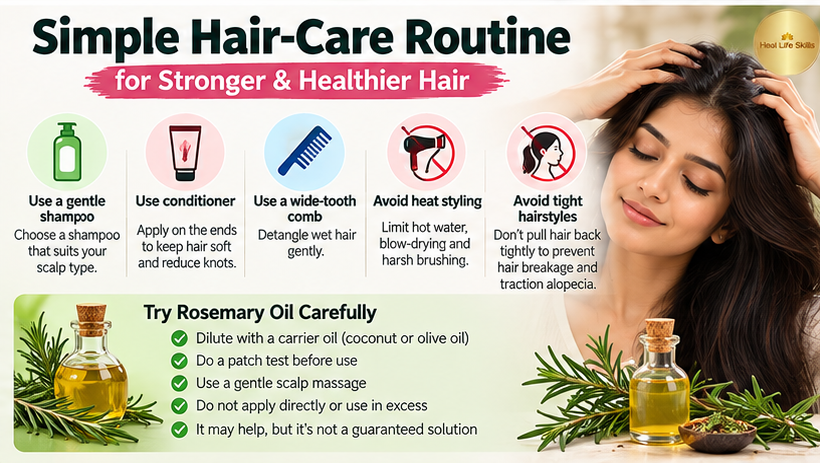
Taking care of your hair starts with protecting the scalp and preventing breakage. Wash your hair regularly with a shampoo that suits your scalp type. Use conditioner on the ends of your hair to keep it soft and reduce knots.
Avoid hot water blow-drying, rough towel drying and harsh brushing. Use a wide-tooth comb to detangle wet hair.
If you have thinning near the forehead avoid ponytails, buns and styles that pull the hair back. Constant pulling can damage hair follicles. Lead to traction alopecia.
3. Try Rosemary Oil Carefully
Rosemary oil is a home remedy for hair growth. The science behind it is still not strong and it shouldn’t be seen as a guaranteed solution.
Always dilute essential oil with a carrier oil like coconut or olive oil. Follow the product instructions. Do a patch test before applying it to your scalp. Stop using it if you feel any irritation. Never apply the oil directly to your skin without diluting it.
A light scalp massage can feel relaxing. Rubbing too hard won’t make your hair grow faster.
4. Avoid Unnecessary Supplements
Taking iron, biotin, zinc or vitamin D supplements isn’t helpful for everyone. High doses, without a deficiency may not work and could even be harmful.
If your hair fall keeps happening see a doctor. They might check for anemia, iron or thyroid issues based on your symptoms and medical history.
5. When Should You Seek Advice?
See a dermatologist if your hairline keeps receding your scalp becomes more visible your parting gets wider or you keep losing hair. Also go if you feel pain, redness or smooth bald spots on your scalp.
Early care can help find the cause and lead to the treatment.
Conclusion
Improving hair health naturally begins with a diet gentle hair care and avoiding tight hairstyles. These habits can support hair but they can’t fix every type of thinning. Be patient and stay consistent. If your hair loss continues talk to a professional. Remember, finding the root cause is often the way to get stronger healthier hair.